From its foundation until today, the traditional Perwanger company has always been about class rather than mass.
For more than 200 years, the focus at the Perwanger tannery has been on the idea of developing the best possible leather for people who are passionate about the outdoors and want to compete with nature’s challenges. Environmental protection and sustainable production are simply part of this.
For it is no longer as it was 200 years ago, when man had to submit to the forces of nature. Today, it is man who controls nature and which he can even destroy if he does not behave prudently and responsibly. And that is precisely why nature also serves as a model for us and we try to preserve in our premium leather exactly the same properties that a natural skin also brings with it: these are air permeability, i.e. breathability, water impermeability and a particularly long shelf life.
This way, we can help to ensure that the shoes made from our leather are worn for a particularly long time before they finally wear out and return to the cycle of nature. We are convinced that long durability and use is an important key to sustainable products and sustainable production.
Because we love our home and nature, we also work continuously to improve resource-saving and environmentally friendly production. Many factors have to interact: from the origin of the raw material to the use of chemicals and water in the tanning process to the importance of modern technology for an optimal energy balance …
We already changed the manufacturing location with the Perwanger tannery to Arzignano in Italy in the 1980s in order to be connected to the most modern sewage treatment plant in Europe. Since then, we have also invested a lot of money in modern technology and intelligent control of all processes. But our employees are especially important for the continuous improvement of the leather and the manufacturing methods. After all, they are the ones who use all their creativity and ideas to elevate sustainability and nature conservation from mere lip service to a matter of the heart.
From its foundation until today, the traditional Perwanger company has always been about class instead of mass.
For more than 200 years, the focus at the Perwanger tannery has been on the idea of developing the best possible leather for people who are passionate about being outdoors and want to compete with the challenges of nature. Environmental protection and sustainable production are simply a part of this.
For it is no longer as it was 200 years ago, when man had to submit to the forces of nature. Today, it is man who controls nature and which he can even destroy if he does not behave prudently and responsibly. And that is precisely why nature also serves as a model for us and we try to preserve in our premium leather exactly the same properties that a natural skin also brings with it: these are air permeability, i.e. breathability, water impermeability and a particularly long shelf life.
This way, we can help to ensure that the shoes made from our leather are worn for a particularly long time before they finally wear out and return to the cycle of nature. We are convinced that long durability and use is an important key to sustainable products and sustainable production.
Because we love our home and nature, we also work continuously to improve resource-saving and environmentally friendly production. In doing so, many factors have to be taken into account and interact: from the origin of the raw material to the use of chemicals and water in the tanning process to the importance of modern technology for an optimal energy balance …
With the Perwanger tannery, we already changed the manufacturing location to Arzignano in Italy in the 1980s in order to be connected to the most modern sewage treatment plant in Europe. Since then, we have also invested a lot of money in modern technology and intelligent control of all processes. But our employees are particularly important for the continuous improvement of the leather and the manufacturing methods. After all, they are the ones who use all their creativity and ideas to elevate sustainability and nature conservation from mere lip service to a matter of the heart.
Leather lasts a very long time, but fortunately not for eternity!
One of the biggest problems for the earth and especially the oceans is the accumulated plastic waste. I am thinking not only of the visible plastic waste but also of the microscopically small crushed fibres and beads that can hardly be seen with the naked eye.
All these plastics will not disappear in the foreseeable future, because most plastic waste does not decompose but is ground into smaller and smaller pieces. So they remain harmful for decades and eventually accumulate through the food chain in all living things.
Why isn’t everything actually made from degradable materials?
Today, it is even possible to build entire houses in an environmentally friendly way using degradable or recyclable materials. In view of our suffering environment, I sometimes ask myself why clothes or shoes are so often made of plastics?
If you want to know how environmentally friendly the materials used are, you can look at the degradation rate of the material.
The following material groups can be found for this purpose:
Our Perwang leather belongs to this last group, the royal class – that’s why I work here with a good feeling!
Leather lasts a very long time, but fortunately not for eternity!
One of the biggest problems for the earth and especially the oceans is the accumulated plastic waste. I am thinking not only of the visible plastic waste but also of the microscopically small crushed fibres and beads that can hardly be seen with the naked eye.
All these plastics will not disappear in the foreseeable future, because most plastic waste does not decompose but is ground into smaller and smaller pieces. So they remain harmful for decades and eventually accumulate through the food chain in all living things.
Why isn’t everything actually made from degradable materials?
Today, it is even possible to build entire houses in an environmentally friendly way using degradable or recyclable materials. In view of our suffering environment, I sometimes ask myself why clothes or shoes are so often made of plastics?
If you want to know how environmentally friendly the materials used are, you can look at the degradation rate of the material.
The following material groups can be found for this purpose:
Our Perwang leather belongs to this last group, the royal class – that’s why I work here with a good feeling!
Modern technology and digitalisation for a liveable future
Intelligent processes have not even stopped at the originally artisanal activity of leather tanning at Perwanger. Here, digitalisation and sophisticated machine control help us to produce consistent quality from the many individual, naturally grown hides – and they support us in the optimal use of resources in all production steps. Not a litre of water should be wasted and no heating element should waste energy.
One of the important balances is the energy balance
As in many modern industries, energy consumption is an extremely critical issue at Perwanger. On the one hand, of course, to save costs, because energy is expensive – but on the other hand, to save valuable resources and protect the climate. At Perwanger, we decided very early on to purchase green electricity, i.e. electricity from renewable energy sources.
Sustainable future for a living material thousands of years old
None of this can be taken for granted! Our leather competes with leather from Asian countries where workers are exploited, consumer health plays no role and modern environmental standards are completely unknown.
We are therefore very proud of the investments that are continuously made at Perwanger to conserve resources.
And we are happy to give the natural material leather, which has accompanied mankind for thousands of years, a clean sustainable future.
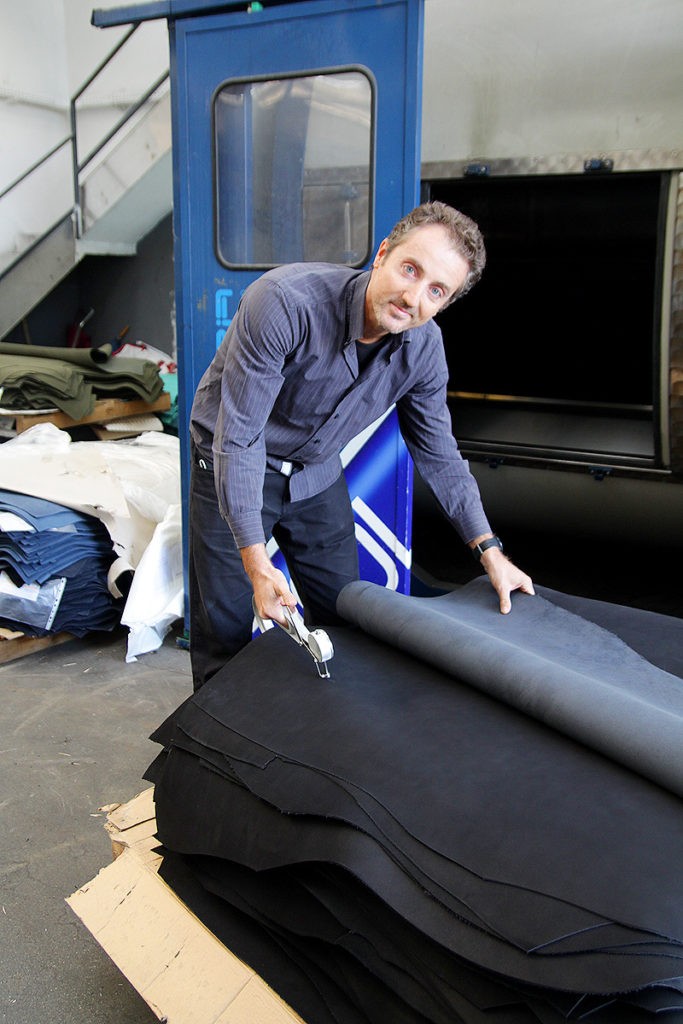
Modern technology and digitalisation for a liveable future
Intelligent processes have not even stopped at the originally artisanal activity of leather tanning at Perwanger. Here, digitalisation and sophisticated machine control help us to produce consistent quality from the many individual, naturally grown hides – and they support us in the optimal use of resources in all production steps. Not a litre of water should be wasted and no heating element should waste energy.
One of the important balances is the energy balance
As in many modern industries, energy consumption is an extremely critical issue at Perwanger. On the one hand, of course, to save costs, because energy is expensive – but on the other hand, to save valuable resources and protect the climate. At Perwanger, we decided very early on to purchase green electricity, i.e. electricity from renewable energy sources.
Sustainable future for a living material thousands of years old
None of this can be taken for granted! Our leather competes with leather from Asian countries where workers are exploited, consumer health plays no role and modern environmental standards are completely unknown.
We are therefore very proud of the investments that are continuously made at Perwanger to conserve resources.
And we are happy to give the natural material leather, which has accompanied mankind for thousands of years, a clean sustainable future.
Nature conservation begins with the purchase of materials
Anyone who refines naturally grown raw materials, as we do at the Perwanger tannery, knows from experience that the quality of the end product depends to a large extent on the quality of the raw material purchased.
At Perwanger we rely on skins from rural European regions
Animal husbandry close to nature has many positive consequences for the environment – farmers confirm this to me again and again, but above all it is a prerequisite for a particularly high quality of hides and leather.
The Perwanger seal makes the origin of the hides transparent for the buyer
With this elaborate, continuous optimisation process, we distinguish ourselves from tanneries where only economic efficiency is the top priority in material purchasing.
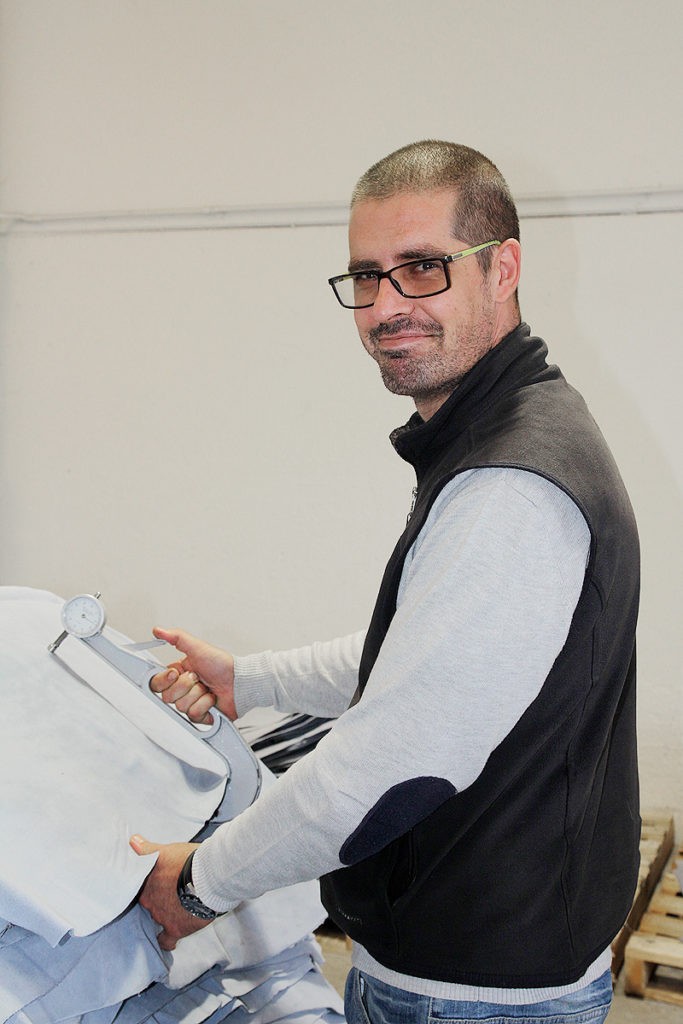
Nature conservation begins with the purchase of materials
Anyone who refines naturally grown raw materials, as we do at the Perwanger tannery, knows from experience that the quality of the end product depends to a large extent on the quality of the raw material purchased.
At Perwanger we rely on skins from rural European regions
Animal husbandry close to nature has many positive consequences for the environment – farmers confirm this to me again and again, but above all it is a prerequisite for a particularly high quality of hides and leather.
The Perwanger seal makes the origin of the hides transparent for the buyer
With this elaborate, continuous optimisation process, we distinguish ourselves from tanneries where only economic efficiency is the top priority in material purchasing.
Respect towards life and nature
In some parts of the world, leather is produced with disregard for animal welfare, climate protection and occupational health and safety. This production is simply about throwing the cheapest leather on the market. That is not acceptable to me. And I am glad that at Perwanger we are taking a completely different – indeed, an opposite – path.
Perwanger’s high quality standards begin with the choice of hides. These come mainly from rural European regions where the cattle can still live very naturally under the best conditions. No animal is bred especially for Perwanger leather – our hides are an important by-product of agricultural meat and dairy farming.
We pull together with our customers: for a modern and lively material
It is really amazing and it is a great incentive for the whole team that the customers of the Perwanger tannery always demand the highest quality. And that this demand for quality does not end with the properties of the leather, but also keeps an eye on the choice of raw materials and the manufacturing process.
The fact that there are so many people who care about leather far more than functional synthetic fibres made from petroleum gives me great hope for our future and the climate:
Those who choose a living material like leather will not lose sight of all life on the planet and the protection of an unspoiled nature.
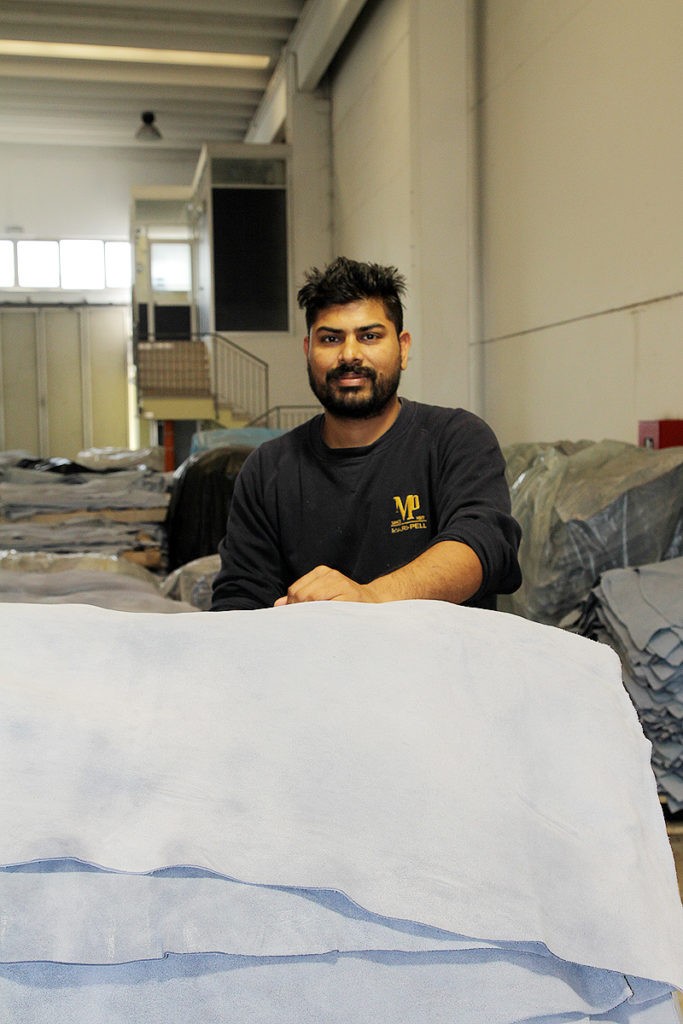
Respect towards life and nature
In some parts of the world, leather is produced with disregard for animal welfare, climate protection and occupational health and safety. This production is simply about throwing the cheapest leather on the market. That is not acceptable to me. And I am glad that at Perwanger we are taking a completely different – indeed, an opposite – path.
Perwanger’s high quality standards begin with the choice of hides. These come mainly from rural European regions where the cattle can still live very naturally under the best conditions. No animal is bred especially for Perwanger leather – our hides are an important by-product of agricultural meat and dairy farming.
We pull together with our customers: for a modern and lively material
It is really amazing and it is a great incentive for the whole team that the customers of the Perwanger tannery always demand the highest quality. And that this demand for quality does not end with the properties of the leather, but also keeps an eye on the choice of raw materials and the manufacturing process.
The fact that there are so many people who care about leather far more than functional synthetic fibres made from petroleum gives me great hope for our future and the climate:
Those who choose a living material like leather will not lose sight of all life on the planet and the protection of an unspoiled nature.
Why chemistry is sometimes really good …
Cattle hides are the raw material for the production of high-quality Perwanger leathers, which are later used for the production of demanding and resilient mountain boots for alpine sports, extremely robust work boots or motorbike boots.
These hides consist largely of so-called collagen, which, with a share of over 30 % of the total mass of all proteins, is the essential organic component of the hide. Cross-linked collagen fibres form the structure of leather and give it its tensile strength.
With the help of our tanning agents, certain properties such as flexibility and resistance to decomposition by microorganisms are achieved. While decades ago the tanning of leather entailed quite a bit of environmental pollution, this has changed completely today thanks to state-of-the-art processes and a noticeable advance in science.
Chemicals are also used in the Perwanger tannery to finish the cattle hides
In fact, up to 30% or 40% of the leather weight is not the actual raw material collagen, but substances applied with the tanning process. We use 50 to 60 different leather chemicals as well as fats.
Without professional tanning, the hides would rot within a few days. A complicated chemical process chain (the tanning) makes the naturally unusable animal skins resilient and durable for decades. We give the leather its character in the tanning process and dye it for a modern design. We optimise the naturally uneven surface so that the punching yield – i.e. the utilisation of the hides is increased and the waste is reduced. We also give our leathers the typical technical Perwanger properties. Perwanger leathers are particularly waterproof and dirt-repellent and they are resistant to scratches and abrasion.
All these positive properties that distinguish Perwanger leathers are produced in chemical processes. Chemistry’ is indispensable for high-quality leather production.
Not all chemistry is the same
At Perwanger, we always ask ourselves which tanning agents need to be used and which can be substituted or completely eliminated through more modern processes. In our continuous optimisation and research process, we have always focused on environmental compatibility and a preference for renewable raw materials. As far as it does not affect the leather quality, we use ‘modern chemistry’ with a high organic content (e.g. casein, minerals, lignins).
Why chemistry is sometimes really good …
Cattle hides are the raw material for the production of high-quality Perwanger leathers, which are later used for the production of demanding and resilient mountain boots for alpine sports, extremely robust work boots or motorbike boots.
These hides consist largely of so-called collagen, which, with a share of over 30 % of the total mass of all proteins, is the essential organic component of the hide. Cross-linked collagen fibres form the structure of leather and give it its tensile strength.
With the help of our tanning agents, certain properties such as flexibility and resistance to decomposition by microorganisms are achieved. While decades ago the tanning of leather entailed quite a bit of environmental pollution, this has changed completely today thanks to state-of-the-art processes and a noticeable advance in science.
Chemicals are also used in the Perwanger tannery to finish the cattle hides
In fact, up to 30% or 40% of the leather weight is not the actual raw material collagen, but substances applied with the tanning process. We use 50 to 60 different leather chemicals as well as fats.
Without professional tanning, the hides would rot within a few days. A complicated chemical process chain (the tanning) makes the naturally unusable animal skins resilient and durable for decades. We give the leather its character in the tanning process and dye it for a modern design. We optimise the naturally uneven surface so that the punching yield – i.e. the utilisation of the hides is increased and the waste is reduced. We also give our leathers the typical technical Perwanger properties. Perwanger leathers are particularly waterproof and dirt-repellent and they are resistant to scratches and abrasion.
All these positive properties that distinguish Perwanger leathers are produced in chemical processes. Chemistry’ is indispensable for high-quality leather production.
Not all chemistry is the same
At Perwanger, we always ask ourselves which tanning agents need to be used and which can be substituted or completely eliminated through more modern processes. In our continuous optimisation and research process, we have always focused on environmental compatibility and a preference for renewable raw materials. As far as it does not affect the leather quality, we use ‘modern chemistry’ with a high organic content (e.g. casein, minerals, lignins).
I always wanted to learn an ancient and natural craft: tanning – this millennia-old art of refining animal skin into natural leather – therefore appealed to me in particular.
Of course, this craft has also taken on an industrial dimension in the meantime. And that’s a good thing, because our exceptionally high leather quality can only be achieved with modern machinery and precise scientific and technical specifications.
Machines support nature
Machine use is also better for sustainability and the environment than you might initially think: our modern machines can save a large amount of water – and also significantly reduce the amount of energy used.
You can’t do it without people
Of course, even the best machine cannot produce a natural material like leather on its own. After all, every hide is a little different. That’s why I’m proud to use my experience and a great deal of intuition to ensure that everything runs smoothly, that temperatures and times are optimised in every process step and that every piece of hide is tanned into original Perwanger leather under ideal conditions.
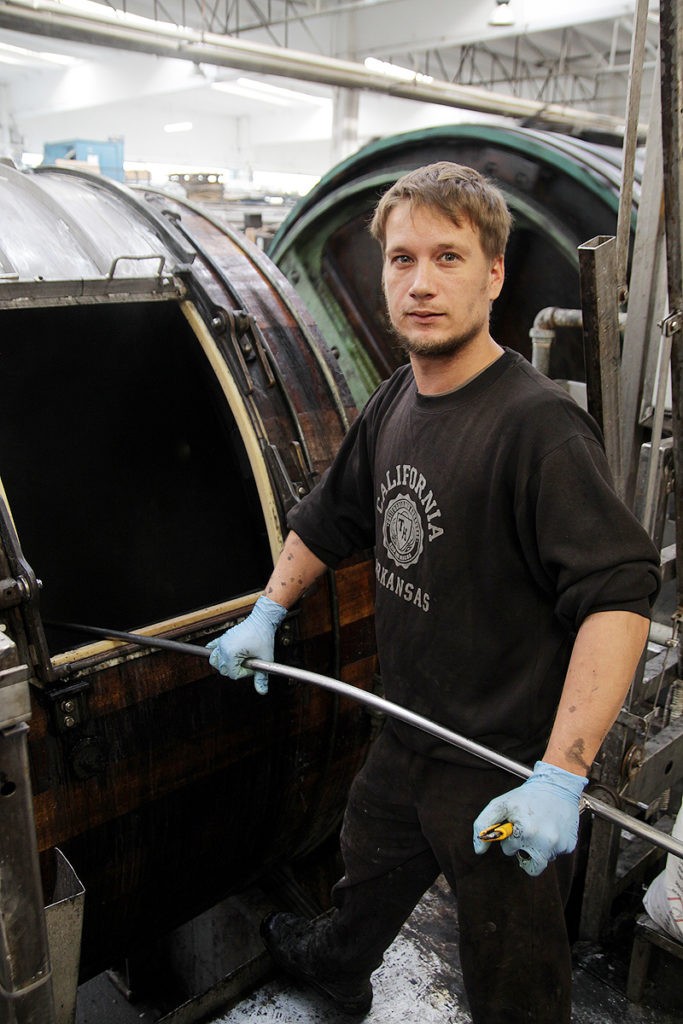
I always wanted to learn an ancient and natural craft: tanning – this millennia-old art of refining animal skin into natural leather – therefore appealed to me in particular.
Of course, this craft has also taken on an industrial dimension in the meantime. And that’s a good thing, because our exceptionally high leather quality can only be achieved with modern machinery and precise scientific and technical specifications.
Machines support nature
Machine use is also better for sustainability and the environment than you might initially think: our modern machines can save a large amount of water – and also significantly reduce the amount of energy used.
You can’t do it without people
Of course, even the best machine cannot produce a natural material like leather on its own. After all, every hide is a little different. That’s why I’m proud to use my experience and a great deal of intuition to ensure that everything runs smoothly, that temperatures and times are optimised in every process step and that every piece of hide is tanned into original Perwanger leather under ideal conditions.
Is there anything more important than water? I don’t think so! And I am certainly not alone in this contemporary view at Perwanger.
Water is life and, as climate change progresses, there will be more and more people who will not have self-evident access to this most precious of resources.
We tanners are often accused of using an incredible amount of water in leather production.
There is talk of up to 17,000 litres of water for 1 sqm of leather (source, in german language). How do such figures come about? Is it fairly calculated, considering our field of work – the production of exceptionally high-performance natural leathers?
I don’t think so: 99% of the amount of water (approx. 16,800 litres) charged here relates to the rainwater that grass needs to grow, which the cattle eat, from which our raw material comes. I find it a bit strange that this amount of water is added to the leather, although the cattle are not kept specifically for leather production, but for the dairy products and the meat.
And: this water is of course in no way ‘wasted’ or could be saved without cattle. Rainwater always falls from the sky – quite independently of cattle breeding or leather production.
The Perwanger tannery needs only 100 to 250 litres of water per square metre of leather.
I know that for a fact, because at Perwanger we have to keep a close eye on water consumption in production. In contrast, the production of one square metre of textile (e.g. denim jeans) requires more than 1,000 litres. That is almost ten times as much.

Is there anything more important than water? I don’t think so! And I am certainly not alone in this contemporary view at Perwanger.
Water is life and, as climate change progresses, there will be more and more people who will not have self-evident access to this most precious of resources.
We tanners are often accused of using an incredible amount of water in leather production.
There is talk of up to 17,000 litres of water for 1 sqm of leather (source, in german language). How do such figures come about? Is it fairly calculated, considering our field of work – the production of exceptionally high-performance natural leathers?
I don’t think so: 99% of the amount of water (approx. 16,800 litres) charged here relates to the rainwater that grass needs to grow, which the cattle eat, from which our raw material comes. I find it a bit strange that this amount of water is added to the leather, although the cattle are not kept specifically for leather production, but for the dairy products and the meat.
And: this water is of course in no way ‘wasted’ or could be saved without cattle. Rainwater always falls from the sky – quite independently of cattle breeding or leather production.
The Perwanger tannery needs only 100 to 250 litres of water per square metre of leather.
I know that for a fact, because at Perwanger we have to keep a close eye on water consumption in production. In contrast, the production of one square metre of textile (e.g. denim jeans) requires more than 1,000 litres. That is almost ten times as much.
Put an end to the throwaway society now!
After the actual tanning, our leather cannot yet be processed. It still has to be made ready for use by finishing. In this field of work, it is also one of my tasks to make maximum use of the cowhide and to ensure that as few raw materials as possible are wasted.
It is part of the respect for nature that it is fully utilised.
Leather is made from the waste of milk and meat production:
The idea of utilisation already starts with the hides themselves: Cattle are not bred for leather production, but for milk or meat production. The hide accounts for only 0.42 % of the value of a cow. If the hides were not processed into leather, they would have to be burned as waste. This would result in an enormous burden on the environment.
Leather production is part of a comprehensive upcycling chain
The animal skin is therefore a by-product that would simply spoil and be harmful waste without being tanned into leather. This is why our activity is also called ‘upcycling’.
It is part of the respect for nature that it is fully utilised
If a tannery buys 10 t of raw material, 2-3 t of valuable leather are produced from it, the rest (70%) are again by-products that cannot be utilised in leather production. However, these by-products consist of proteins and ceratins and form a high-quality raw material for cosmetics, adhesives, gelatine and other products.
The optimal complete utilisation of the by-products results from the intensive cooperation between the chemical industry and the tanneries.
To be fair, the environmental balance of leather has to be considered positively:
1. Leather production avoids the environmental damage from the destruction of hundreds of thousands of tonnes of hides.
2. Even the remaining organic waste from leather production can be used as raw material in subsequent productions.
I am convinced that the environmental balance, taking these aspects into account, is enormously positive compared to other raw materials such as textiles or plastics.
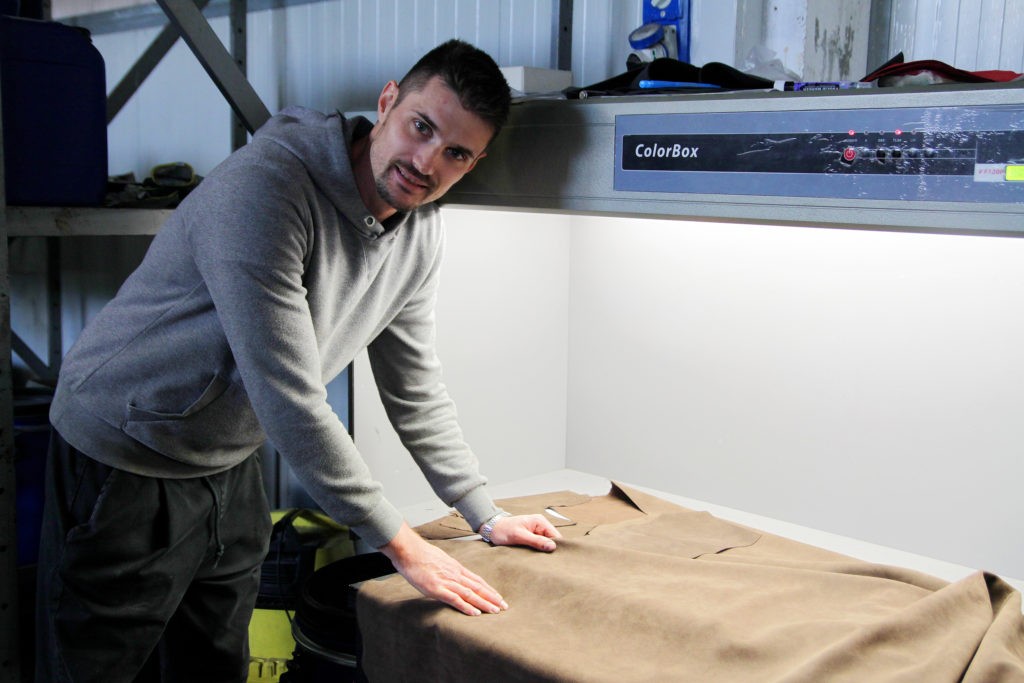
Put an end to the throwaway society now!
After the actual tanning, our leather cannot yet be processed. It still has to be made ready for use by finishing. In this field of work, it is also one of my tasks to make maximum use of the cowhide and to ensure that as few raw materials as possible are wasted.
It is part of the respect for nature that it is fully utilised.
Leather is made from the waste of milk and meat production:
The idea of utilisation already starts with the hides themselves: Cattle are not bred for leather production, but for milk or meat production. The hide accounts for only 0.42 % of the value of a cow. If the hides were not processed into leather, they would have to be burned as waste. This would result in an enormous burden on the environment.
Leather production is part of a comprehensive upcycling chain
The animal skin is therefore a by-product that would simply spoil and be harmful waste without being tanned into leather. This is why our activity is also called ‘upcycling’.
It is part of the respect for nature that it is fully utilised
If a tannery buys 10 t of raw material, 2-3 t of valuable leather are produced from it, the rest (70%) are again by-products that cannot be utilised in leather production. However, these by-products consist of proteins and ceratins and form a high-quality raw material for cosmetics, adhesives, gelatine and other products.
The optimal complete utilisation of the by-products results from the intensive cooperation between the chemical industry and the tanneries.
To be fair, the environmental balance of leather has to be considered positively:
1. Leather production avoids the environmental damage from the destruction of hundreds of thousands of tonnes of hides.
2. Even the remaining organic waste from leather production can be used as raw material in subsequent productions.
I am convinced that the environmental balance, taking these aspects into account, is enormously positive compared to other raw materials such as textiles or plastics.
A lot of water, a lot of energy, a lot of chemicals – this can also be done more sustainably
Liming, fleshing, edging, splitting, tanning, sorting, folding, retanning, wilting, stretching, vacuum drying, suspension drying, moistening, studding, stretching, trimming, finishing, sanding, dry splitting, reverse side machine, milling, spraying machine, roll coater, embossing, ironing, measuring … these are the names of the processes and work steps in leather production.
Reduce the use of chemicals, energy and water
Consistent optimisation and monitoring of the individual production steps leads to exceptional leather quality – and helps to optimise the use of resources. At Perwanger, we continuously think about whether and how process steps can be modernised and made more ecological. For example, we recycle the water during the production process and can thus use it several times.
Intelligent technology in an old craft
I am excited about how quickly an old craft can be transformed into environmentally friendly, modern production by adding modern technology and intelligent control.
The goal of sustainable leather production is probably still a long way off – but I am happy to take on the challenge of protecting tomorrow’s world.
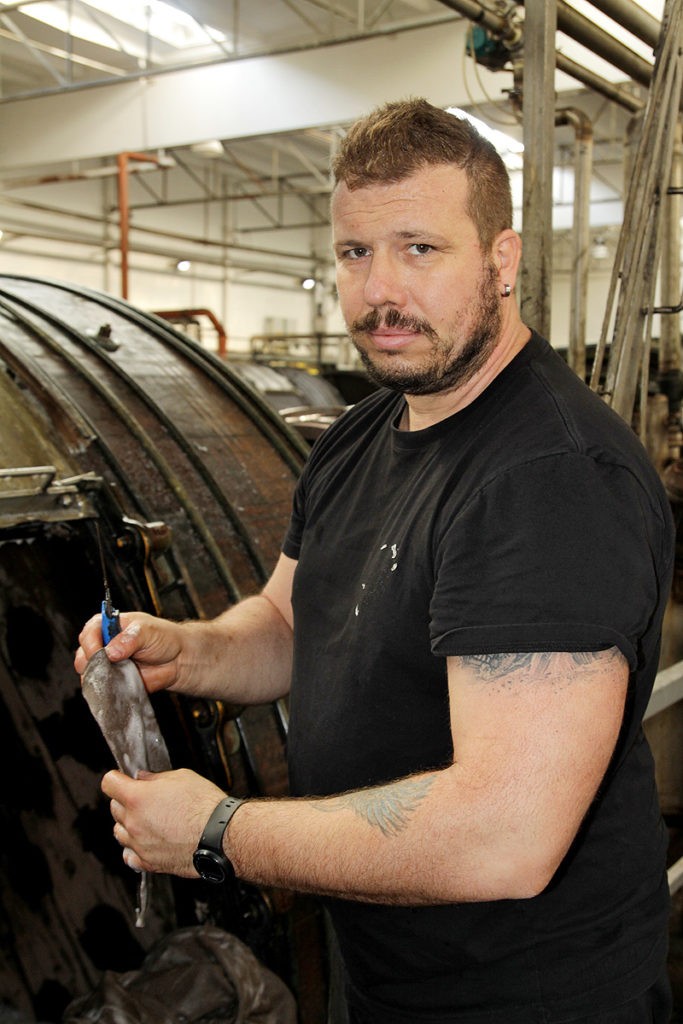
A lot of water, a lot of energy, a lot of chemicals – this can also be done more sustainably
Liming, fleshing, edging, splitting, tanning, sorting, folding, retanning, wilting, stretching, vacuum drying, suspension drying, moistening, studding, stretching, trimming, finishing, sanding, dry splitting, reverse side machine, milling, spraying machine, roll coater, embossing, ironing, measuring … these are the names of the processes and work steps in leather production.
Reduce the use of chemicals, energy and water
Consistent optimisation and monitoring of the individual production steps leads to exceptional leather quality – and helps to optimise the use of resources. At Perwanger, we continuously think about whether and how process steps can be modernised and made more ecological. For example, we recycle the water during the production process and can thus use it several times.
Intelligent technology in an old craft
I am excited about how quickly an old craft can be transformed into environmentally friendly, modern production by adding modern technology and intelligent control.
The goal of sustainable leather production is probably still a long way off – but I am happy to take on the challenge of protecting tomorrow’s world.
Leather is wonderful – but also not quite easy …
I particularly love the organic material leather because it brings with it a distinct individuality and even different strengths compared to man-made materials.
Every skin bears traces and stories from the life of cattle – from mosquito bites to scars from major injuries.
Nevertheless, the leather must be brought to a precisely defined thickness and surface finish for processing by our customers. Here we are talking about accuracies of 1/10 mm.
To avoid rejects and mistakes in the process, it is particularly important that the hide has been prepared using optimal tanning methods.
We rely on traditional chrome tanning – and for good reason
Here at Perwanger we still rely on the ‘wet blue’ tanning process. This sounds conservative, because chromium III salts are used here. But by using the appropriate auxiliaries and intelligent process control, no more toxic substances are produced during the manufacturing process.
The result is that the high technical demands placed on our leather can only be achieved in this process. Although we at Perwanger have already invested a lot of time and know-how in the testing and development of alternative tanning agents, we are still convinced today that traditional tanning is ‘on balance’ better than the alternative tanning agents currently available.
.
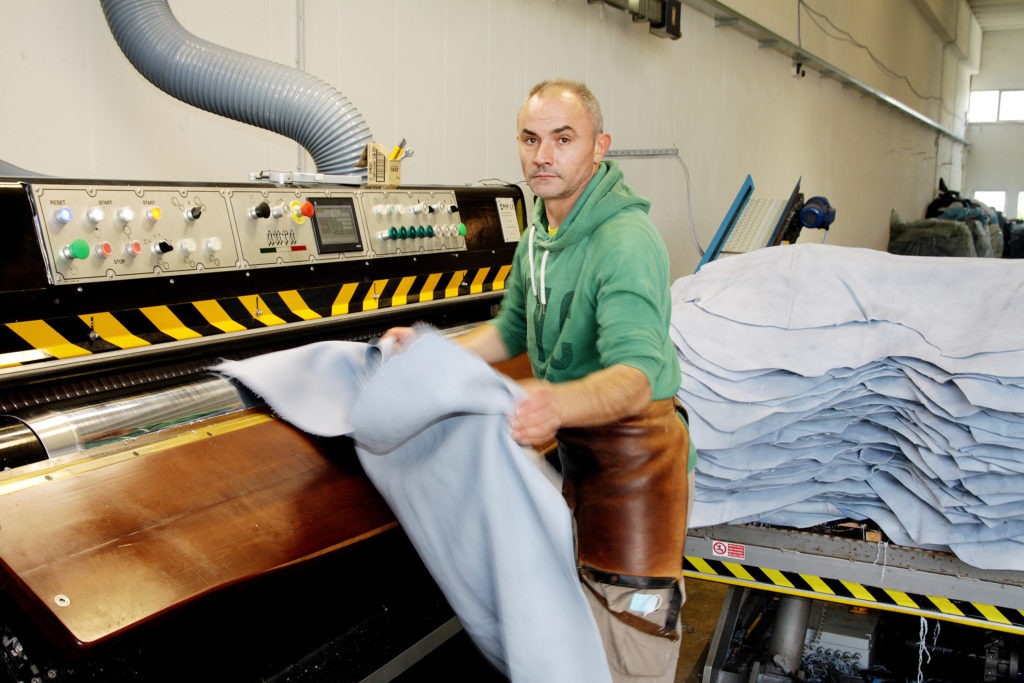
Leather is wonderful – but also not quite easy …
I particularly love the organic material leather because it brings with it a distinct individuality and even different strengths compared to man-made materials.
Every skin bears traces and stories from the life of cattle – from mosquito bites to scars from major injuries.
Nevertheless, the leather must be brought to a precisely defined thickness and surface finish for processing by our customers. Here we are talking about accuracies of 1/10 mm.
To avoid rejects and mistakes in the process, it is particularly important that the hide has been prepared using optimal tanning methods.
We rely on traditional chrome tanning – and for good reason
Here at Perwanger we still rely on the ‘wet blue’ tanning process. This sounds conservative, because chromium III salts are used here. But by using the appropriate auxiliaries and intelligent process control, no more toxic substances are produced during the manufacturing process.
The result is that the high technical demands placed on our leather can only be achieved in this process. Although we at Perwanger have already invested a lot of time and know-how in the testing and development of alternative tanning agents, we are still convinced today that traditional tanning is ‘on balance’ better than the alternative tanning agents currently available.
.
From time to time one has to review one’s own criteria so that it goes on properly
Dhe 100% quality of our leather is responsible for a long product life. This applies to every square metre and every single hide that leaves our house.
How do we define Perwanger quality?
We check every shipment for flawlessness of the surface and uncompromising compliance with the special properties agreed with the customer in each case.
But the high reliability and the special Perwanger leather features such as the vivid colour, the robust surface, the breathability and water resistance alone do not make the quality for me.
Defining factors for quality in a contemporary way
In addition to modern product quality, ‘soft’ factors should also be added at Perwanger. By this I mean the sustainability of the raw materials used, resource-saving production and uncompromising transparency towards the consumer.
Our goal: ‘Cradle to Grave’ – climate neutral
Looking at the CO2 footprint of Perwang leather from the slaughterhouse through production to destruction (for example, incineration at the end of the material’s life cycle), the material is largely climate-neutral. This does not apply to synthetic materials, i.e. plastics!
And because nature lovers, mountaineers, forest workers, hunters or motorcyclists can also trust that the new shoe will keep its promise in terms of durability and wearing comfort, the environmental balance is also right in the end.
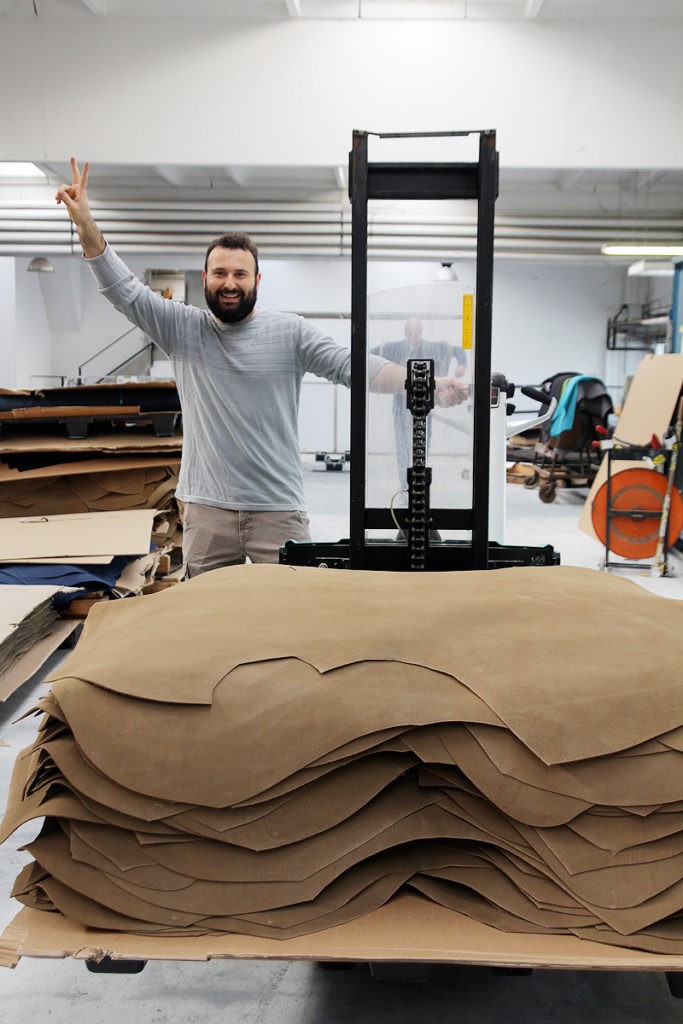
From time to time one has to review one’s own criteria so that it goes on properly
Dhe 100% quality of our leather is responsible for a long product life. This applies to every square metre and every single hide that leaves our house.
How do we define Perwanger quality?
We check every shipment for flawlessness of the surface and uncompromising compliance with the special properties agreed with the customer in each case.
But the high reliability and the special Perwanger leather features such as the vivid colour, the robust surface, the breathability and water resistance alone do not make the quality for me.
Defining factors for quality in a contemporary way
In addition to modern product quality, ‘soft’ factors should also be added at Perwanger. By this I mean the sustainability of the raw materials used, resource-saving production and uncompromising transparency towards the consumer.
Our goal: ‘Cradle to Grave’ – climate neutral
Looking at the CO2 footprint of Perwang leather from the slaughterhouse through production to destruction (for example, incineration at the end of the material’s life cycle), the material is largely climate-neutral. This does not apply to synthetic materials, i.e. plastics!
And because nature lovers, mountaineers, forest workers, hunters or motorcyclists can also trust that the new shoe will keep its promise in terms of durability and wearing comfort, the environmental balance is also right in the end.
What can you do for a better future in your purchasing decisions?
Today, everyone is interested in sustainability and ecologically sound, fair production of their clothing, shoes and leisure equipment. For good reason, because our environment is threatened like never before and every individual can do something to protect it with their purchasing decisions. However, it is not easy to keep track of the complicated situation: CO2 footprint, energy balance, fair production conditions, sustainably produced raw materials or climate-neutral production … What is important for a better future?
Durability is an important factor for shoes and clothing
When it comes to clothing, whether cotton, leather or man-made fibres, the criterion of durability is ultimately decisive. The longer clothes or shoes are worn or even passed on, the smaller the calculated environmentally harmful footprint becomes (source, in german language).
With our Perwanger leather types, we therefore pay particular attention to a high level of durability. Perwanger leather is robust, resistant to scratches and dirt and even waterproof. Therefore, dirt and other harmful substances can only penetrate the surface with great difficulty and the leather remains intact, true to colour and vital for an exceptionally long time.
Convenience and comfort ensure long-lasting pleasure of use
Added to this is the high wearing comfort. Perwanger leathers are breathable. This guarantees that products made from Perwanger leather not only look good for a long time, but are also worn gladly and often.
The main reason for a poor life cycle assessment of many clothing products and shoes is that they are thrown away before they are really broken because they could not fulfil the expectations of comfort and convenience when worn.
In contrast, Perwanger leather offers material properties that can meet the requirements of modern consumers in every respect.
We dedicate all our love to good leather
We are proud to use our research results and our carefully executed manufacturing steps to produce a premium leather that is used primarily for shoes with the highest demands: In alpine mountaineering, leisure, the working world or sports …
We believe that the entire company and each individual employee have a part to play in shaping a future worth living in, helping to conserve resources and save nature from destruction.
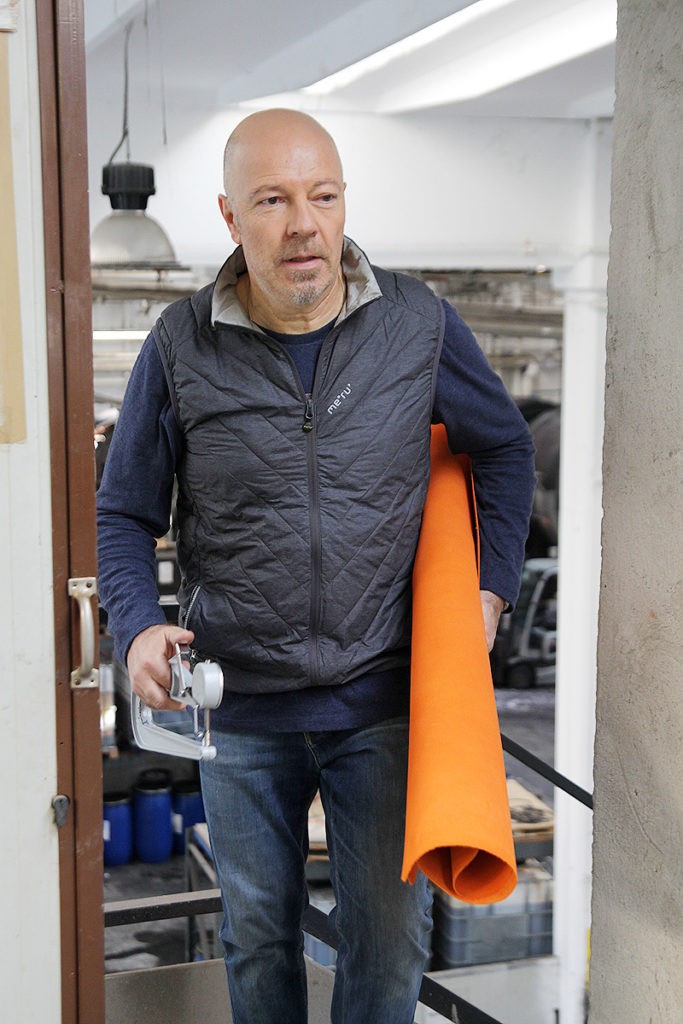
What can you do for a better future in your purchasing decisions?
Today, everyone is interested in sustainability and ecologically sound, fair production of their clothing, shoes and leisure equipment. For good reason, because our environment is threatened like never before and every individual can do something to protect it with their purchasing decisions. However, it is not easy to keep track of the complicated situation: CO2 footprint, energy balance, fair production conditions, sustainably produced raw materials or climate-neutral production … What is important for a better future?
Durability is an important factor for shoes and clothing
When it comes to clothing, whether cotton, leather or man-made fibres, the criterion of durability is ultimately decisive. The longer clothes or shoes are worn or even passed on, the smaller the calculated environmentally harmful footprint becomes (source, in german language).
With our Perwanger leather types, we therefore pay particular attention to a high level of durability. Perwanger leather is robust, resistant to scratches and dirt and even waterproof. Therefore, dirt and other harmful substances can only penetrate the surface with great difficulty and the leather remains intact, true to colour and vital for an exceptionally long time.
Convenience and comfort ensure long-lasting pleasure of use
Added to this is the high wearing comfort. Perwanger leathers are breathable. This guarantees that products made from Perwanger leather not only look good for a long time, but are also worn gladly and often.
The main reason for a poor life cycle assessment of many clothing products and shoes is that they are thrown away before they are really broken because they could not fulfil the expectations of comfort and convenience when worn.
In contrast, Perwanger leather offers material properties that can meet the requirements of modern consumers in every respect.
We dedicate all our love to good leather
We are proud to use our research results and our carefully executed manufacturing steps to produce a premium leather that is used primarily for shoes with the highest demands: In alpine mountaineering, leisure, the working world or sports …
We believe that the entire company and each individual employee have a part to play in shaping a future worth living in, helping to conserve resources and save nature from destruction.

This is the only world we have, which is why we do everything we can to preserve human health and the natural environment: this of course includes ensuring that Perwanger leathers contain no harmful substances.
We are proud to have been awarded the stringent OEKO-TEX® LEATHER STANDARD environmental certification for our high-performance NEPAL leather.